
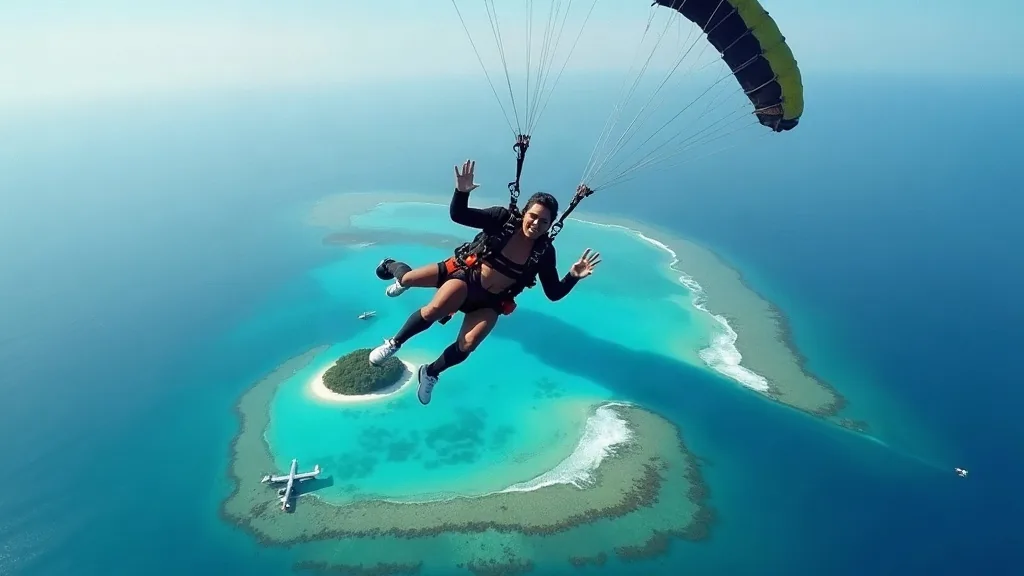
Karimunjawa Skydive is an independent waiting-list desk of Juara Holding Group, not the skydiving operator. Safety at the Karimunjawa jumps belongs to the KISA Boogie Woogie Jump organiser: its instructors, equipment checks, drop-zone rules and briefings. This page explains who holds each responsibility, so you know what to ask before your name goes forward and what the desk can and cannot promise.
Understanding Karimunjawa Skydive Safety Protocols
At Karimunjawa Skydive, honesty about roles comes first. The desk understands that an extreme sport requires complete trust in the team, equipment and procedures, and that trust has to sit with the people who actually run the jump: the KISA event organiser, chaired by Capt. Muhammad Hariri, whose instructors, aircraft and drop-zone operations at Bandara Dewadaru are governed by the organiser’s own rules. The desk does not set, audit or certify those standards, and it will not describe them as its own.
In practice this means that every piece of equipment, from parachutes to harnesses and altimeters, is inspected and packed by the organiser’s riggers, not by anyone at the desk. Tandem instructors and jumpmasters at the event are licensed skydivers brought together by KISA; the desk does not hold their certifications, logbooks or jump counts and will not quote figures it cannot verify. Questions about instructor experience are passed to the organiser, and the desk relays the answer by email from bd@juaraholding.com.
Is Karimunjawa Skydiving Safe? What the Desk Can and Cannot Say
Many prospective jumpers naturally inquire, "Is Karimunjawa skydiving safe?" The honest answer from a waiting-list desk is that skydiving inherently involves risk, and that the measures which reduce it, from instructor training to weather assessments before every jump, are decided and carried out by the KISA event organiser. The desk cannot vouch for a safety record it does not hold, and it will not tell you the answer is a simple yes.
No safety record for the Karimunjawa jumps is published on this site, because the desk has none of its own to publish. The first edition ran 7–11 May 2025 at Bandara Dewadaru with around 50 licensed skydivers and public tandem jumps; that is history the desk can cite, not a statistic about incidents or drills. Emergency procedures, staff training and aircraft checks sit with the organiser’s team, and any question about them is best put to the organiser in writing before you commit to a jump.
Regulatory Compliance and Certifications: Who Holds Them
Karimunjawa Skydive does not hold aviation licences, operating permits or skydiving certifications, and does not claim to. Any such licences, permits or certifications sit with the KISA event organiser and the parties it works with at Bandara Dewadaru; the aircraft, their maintenance and the crews flying them are the organiser’s responsibility, and the desk cannot name the aircraft type or inspection regime because it has not verified them. No dates for a 2026 or 2027 edition have been announced.
What the desk can do is put your compliance questions, from airworthiness to the qualifications of pilots and ground crew, to the organiser before the next edition and reply by email from bd@juaraholding.com with what it learns. If the organiser publishes which international skydiving guidelines it follows, that information will be quoted here with its source rather than restated as a promise. Until then, treat this page as a guide to the questions worth asking, not as an assurance. For details on various packages and what’s included, please visit our Karimunjawa Skydive ticket prices and packages page.
Karimunjawa Skydive Age Limit and Health Considerations
Understanding the Karimunjawa Skydive age limit is crucial for planning your jump, and the honest position is that the age rule for the next edition is set by the KISA event organiser and confirmed at launch, not by this desk. Tandem places are for adults; whether minors with parental consent will be accepted, and whether any upper age guidance applies, is for the organiser to state, and the desk will not quote a figure in advance. Participants are normally required to sign a medical declaration confirming their fitness to skydive.
It is important to mention any medical conditions when you join the waiting list, so the desk can pass them to the organiser. Certain conditions, such as heart problems, severe back issues, or epilepsy, may prevent you from skydiving. The desk strongly recommends consulting your doctor if you have any health concerns before your name goes forward. A guest weight range of 45–95 kg is published for the Karimunjawa jumps, and the final limit for the next edition is confirmed by the organiser at launch. These limits protect both the participant and the instructor, as well as the proper functioning of the equipment.
Equipment Standards and Maintenance
The equipment used at the Karimunjawa jumps is provided and maintained by the KISA event organiser’s team, not by Karimunjawa Skydive, so the desk makes no claim about its make or quality; what follows is the general tandem standard you can ask the organiser to confirm. Every parachute system includes a main parachute, a reserve parachute, and an Automatic Activation Device (AAD). The AAD is a crucial safety feature that automatically deploys the reserve parachute at a predetermined altitude if the main parachute has not been deployed.
- Parachutes: Regularly inspected, repacked, and maintained by certified riggers.
- Harnesses: Checked for wear and tear before every jump, ensuring a secure fit.
- Altimeters: Calibrated and tested to provide accurate altitude readings.
- Automatic Activation Devices (AADs): Serviced according to manufacturer specifications and industry standards.
- Aircraft: Subject to stringent pre-flight checks and ongoing maintenance schedules.
The desk does not own, pack or service any of this gear; the organiser’s riggers and instructors do, under the organiser’s own standards, and that is the party to ask about servicing dates. For groups, the group and corporate skydiving packages page follows the same position: waiting-list places, organiser-run safety.
2027 Note on Evolving Safety Practices
Looking ahead, Karimunjawa Skydive will keep this page honest rather than impressive. The desk does not sit on safety forums or set training methodology; it watches for what the KISA organiser announces about the next edition, including any new rules, and updates this guide when there is something verifiable to add. If a 2026 or 2027 edition is announced, the organiser’s published safety requirements will be quoted here with their source, and waiting-list members will hear by email from bd@juaraholding.com.
FAQ
What safety measures are in place for skydiving in Karimunjawa?
Safety measures at the Karimunjawa jumps are set and run by the KISA Boogie Woogie Jump organiser, not by Karimunjawa Skydive, which is a waiting-list desk of Juara Holding Group. The organiser’s team handles equipment inspections, instructor briefings and drop-zone rules. Tandem systems in general carry a main and reserve parachute plus an Automatic Activation Device (AAD); confirm the specifics with the organiser at launch.
Are there any specific health requirements or conditions that would prevent me from skydiving?
Yes, participants are generally required to be in good health. Conditions such as severe heart problems, significant back or neck issues, epilepsy, or uncontrolled high blood pressure may prevent you from skydiving. It is essential to disclose any medical conditions and consult with a doctor if you have concerns before your jump. A medical waiver is typically required.
What is the typical weight limit for tandem skydiving at Karimunjawa?
For safety reasons and equipment limitations, tandem skydiving works within a weight range; the range published for the Karimunjawa jumps is 45–95 kg. The final limit for the next edition is set by the event organiser and confirmed at launch, and you can email the desk at bd@juaraholding.com with any question while you are on the waiting list.