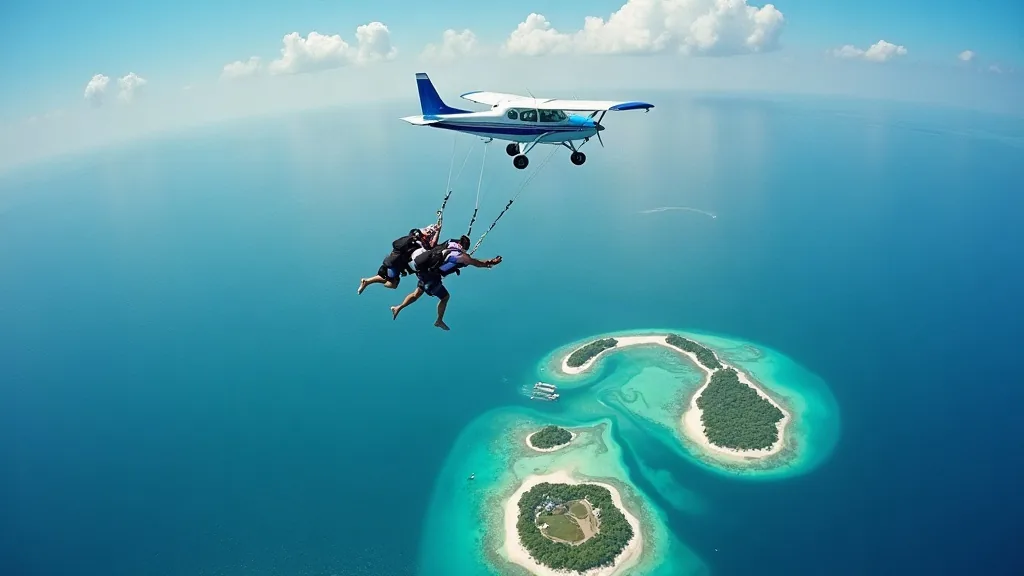
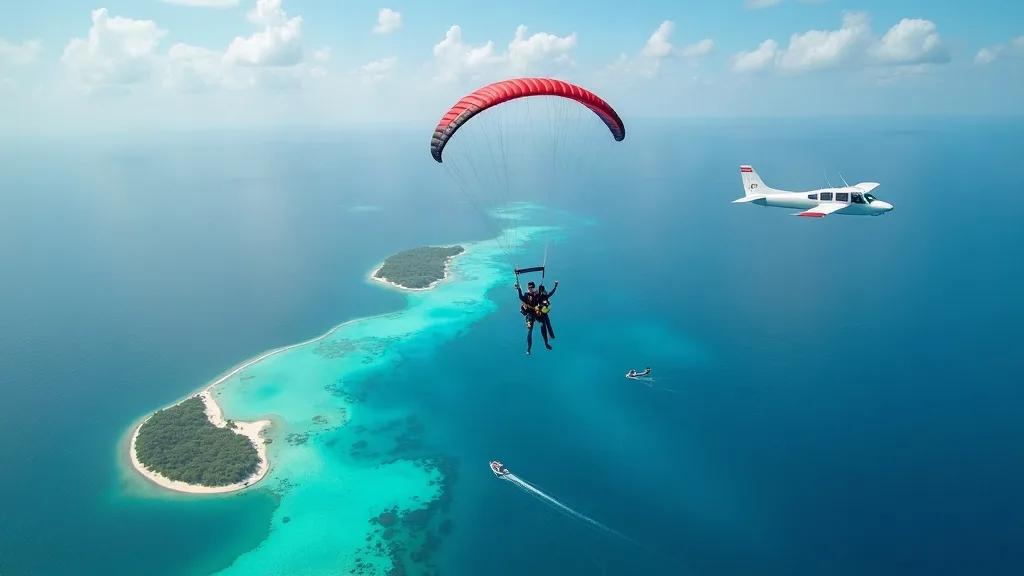
To overcome fear before tandem skydiving in Karimunjawa, focus on facts: licensed instructors, clear weather seasons (April–October), strict weight limits, and a step-by-step briefing on the ground. Aim for a morning slot, meet your instructor early, choose a video package so you can replay what happened, and use slow nose-breathing during the plane ride. Preparation, not bravado, is what makes fear manageable.
Why Fear Before Tandem Skydiving Is Normal – And Manageable
If your heart rate spikes just thinking about the door opening at up to 12,000 ft, that’s completely normal. Nervousness before a first jump is the rule, not the exception. The difference between those who enjoy the jump and those who freeze is simple: they prepare with facts, not imagination.
Karimunjawa, off the north coast of Central Java, combines white-sand islands like Menjangan Besar and crystal sandbars near Cemara Kecil with dry-season visibility that often stretches far across the archipelago. That clarity helps a lot with fear: you see the islands, boats, and reefs clearly instead of a vague void below you. Your brain reads “landscape” instead of “unknown drop.”
A tandem skydive here means you are physically attached to a qualified tandem instructor provided by the event organiser, who handles aircraft checks, exit timing, freefall control, parachute deployment, and landing. Your job is much simpler: listen, breathe, arch, and enjoy the view. Repeating this division of responsibility to yourself is one of the most effective tips to overcome fear before tandem skydiving in Karimunjawa: “They fly and land, I breathe and follow instructions.”
Step-by-Step: What Actually Happens on Jump Day in Karimunjawa
Specific knowledge shrinks fear. Here is the typical sequence you can expect at a KISA tandem jump, from check‑in to landing:
- Check‑in (arrival time set by the organiser) – You arrive at the licensed dropzone near Dewandaru Airport on Kemujan Island, complete a waiver, do a basic health and weight check (the 2025 sheet listed a 45–95 kg guest range; the organiser confirms final limits at launch; see age and weight rules), and get fitted with a jumpsuit and harness.
- Safety & body-position briefing (ground session) – Your instructor explains aircraft procedures, exit posture, how to arch, how to lift your legs for landing, and what all the straps and clips do. This is where you ask every fear-based question; nothing is “silly.”
- Gear-up & plane ride – You board the jump aircraft, which climbs to exit altitude (up to 12,000 ft at the 2025 event). During the climb your instructor does repeated gear checks, which you will see and hear. Many first-timers say watching those checks is the first point their fear begins to drop.
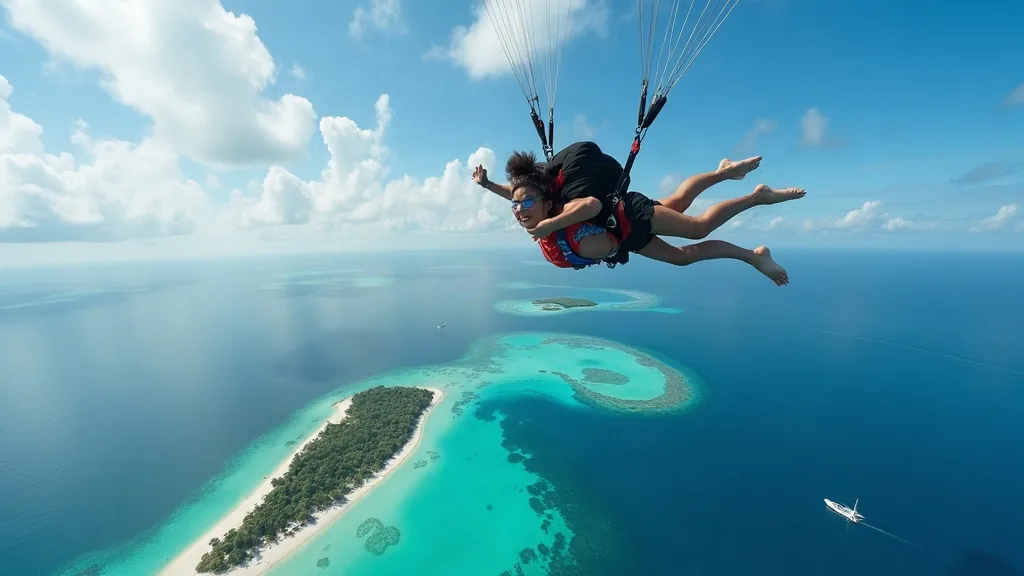
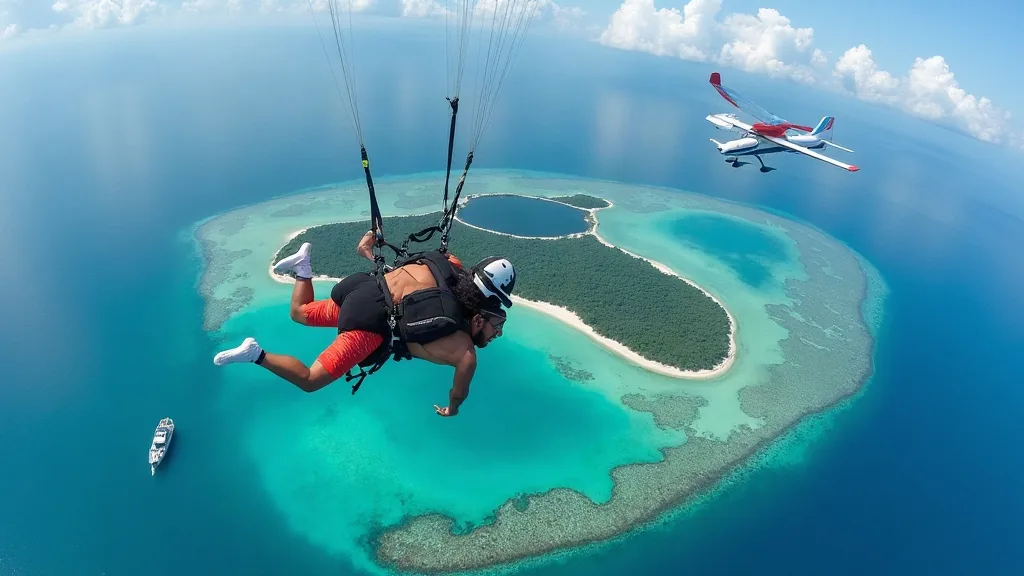
- Freefall (under a minute) – At exit, the airflow quickly settles into a steady rush, as on any tandem jump; the organiser briefs exact figures on the day. The initial “stomach drop” sensation lasts only a moment; after that, it feels more like floating on a powerful cushion of air while you see Karimunjawa’s reef shelves, sandbars, and boats clearly beneath you.
- Parachute flight (several minutes) – The parachute opens well above the ground, at the altitude your instructor briefs on the day. The noise drops dramatically, and most first‑timers say this is the surprise highlight: quiet views of islands like Menjangan Kecil and Karimunjawa town, with time to breathe and chat with your instructor.
- Landing – You lift your legs as briefed; your instructor flares the canopy and lands you on a designated landing area. Most landings are soft, sliding on your backside over the sand or grass.
Reading that sequence a few times, visualising each stage specifically, is one of the most practical tips to overcome fear before tandem skydiving in Karimunjawa. You’re not “falling into nothing”; you are moving through a planned series of steps that tandem passengers follow at drop zones around the world.
Safety, Licensing, and Weather: The Facts That Calm Anxiety
Fear feeds on uncertainty, so replace “what if” loops with hard data. Karimunjawa Skydive is a waiting-list desk, not the operator: the drop zone, instructors and safety procedures belong to the KISA event organiser, who runs the jumps. Key safety components you should know and ask about:
- Instructor experience – Tandem instructors must meet experience requirements before they may take first-timers. You can directly ask, “How many tandem jumps have you done?” and “When was your last safety refresher?”
- Gear technology – Modern tandem rigs include two parachutes (main and reserve) plus an Automatic Activation Device (AAD). The AAD is a small computer that automatically deploys the reserve parachute if the system senses that you are still in freefall below a certain altitude. Knowing this triple layer—main, reserve, AAD—dramatically reduces catastrophic fears.
- Weather windows – Karimunjawa’s best tandem conditions typically run from April to October. Those months usually bring dry trades, stable visibility, and lower cloud cover. November–March is more variable, with higher chances of wind or storms; operators may postpone or cancel if winds at jump altitude are unsafe.
- Medical and age rules – Tandem places are for adults, with the final age rules confirmed by the event organiser at launch; the 2025 sheet listed a 45–95 kg guest range, and the final weight limit is set by the organiser and its equipment. If you have cardiac, respiratory, or spinal conditions, you must disclose them in advance and may require a doctor’s clearance.
For a deeper breakdown of risk controls and decision-making, review Karimunjawa Skydive safety regulations. For what is known so far about weather delays and date changes, see the booking conditions guide. Knowing these frameworks ahead of time helps you accept that cancellations or delays are signs of professionalism, not failure.
Booking, Packages, and Money Anxiety: Clear Numbers Reduce Stress
Uncertainty over cost, timings, and add-ons can quietly fuel your fear. The desk does not set prices; what is known is limited to the 2025 edition and whatever the organiser confirms for the next one:
- Standard Tandem Skydive – Pricing for the next edition is confirmed by the desk at launch; the 2025 edition was priced from USD 525 per tandem including camera.
- Tandem + Video/Photo Package – In 2025 the cameraman was already included in the tandem price; whether separate video tiers exist for the next edition is confirmed by the desk at launch. A hand‑cam or external camera captures pre‑flight briefing, aircraft ride, exit, freefall, canopy, and landing. Having the recording often reassures nervous jumpers because they know they will be able to “replay” and verify what actually happened.
- Group/Corporate Packages – In 2025 a bundle of five tickets was priced slightly lower per jump (USD 510 early bird / USD 555 on the spot); island stays or boat charters around a group jump are quoted by the desk case by case. See group and corporate skydiving options for setups where you can jump with friends or colleagues—another proven way to reduce fear.
Bookings are not open yet: tandem places are tied to the next KISA edition and no dates have been announced, so joining the waiting list is the only step available now. The last-minute booking tips article explains what late joiners can realistically expect once dates are published.
The ticket prices & packages page keeps the 2025 reference figures and will carry the next edition’s pricing once the desk has it confirmed.
Financial clarity reduces a hidden source of anxiety: you are not sitting in the plane thinking about “what if I get charged extra for weather” or “what if I need to change dates.” You already know your rights and options.
Practical Mental and Physical Tips to Overcome Fear Before the Jump
Beyond understanding safety and logistics, here are concrete, field-tested tips to overcome fear before tandem skydiving in Karimunjawa. These are based on patterns first‑time jumpers report at drop zones everywhere:
- 1. Choose a morning slot – Early jumps, where the organiser’s schedule offers them, tend to have smoother air, fewer thermal bumps, and cooler temperatures. You also have less time in the day to build anxiety.
- 2. Sleep short but solid – Aim for 6–8 hours of sleep the night before. Over-researching until 02:00 makes anxiety worse. Stop reading skydive content after 21:00; switch to something neutral.
- 3. Eat a light, normal breakfast – A small portion of rice, eggs, or toast plus water is ideal. Skydiving on an empty or overloaded stomach increases nausea and nerves. Avoid heavy fried food and large coffees right before your check‑in.
- 4. Use a 4-count breathing drill in the plane – Breathe in through your nose for 4 seconds, hold for 4, out for 4, pause for 4. Repeat. This “box breathing” is used by pilots and divers to manage stress; it lowers heart rate and gives your brain a task other than catastrophising.
- 5. Ask your instructor for a “talk-through” – Request constant narration: “We’re still climbing, I’m checking straps, this is normal turbulence, now I’m connecting to you, now we’re doing a gear check.” Many first-timers say having this running commentary is the single biggest fear reducer.
- 6. Decide your one simple job – Choose one focus phrase, such as “arch and smile” or “chin up, legs back.” Let your instructor handle the rest. Overloading yourself with five “to-do’s” increases fear.
- 7. Keep your eyes open on exit – Closing your eyes often makes the fear worse because your brain fills in the blank. If you can, look straight at the horizon when you leave. Seeing the line of islands and sea stabilises your sense of orientation.
- 8. Jump with a friend if possible – Watching someone you know exit before or after you normalises the experience. Combined with group packages, this also reduces cost-related stress.
- 9. Wear the right clothing – Comfortable, close‑fitting sportswear and secure shoes make you feel in control. Avoid dangling jewellery or loose items. For specifics, review the Karimunjawa skydive attire guide so gear-up feels familiar, not alien.
- 10. Plan something low-key after the jump – A simple lunch in Karimunjawa town or sunset at Tanjung Gelam gives your brain a next step. Knowing your day doesn’t end at the landing zone reduces the sense that this is a “life-or-death event.”
If you want a deeper psychological breakdown tailored specifically to first-timers, the dedicated article overcoming fear for first-timers goes further into mindset, expectations, and post-jump decompression.
Making Your Karimunjawa Tandem Skydive Worth Rewatching
One final recommendation: make sure your jump is filmed—in 2025 a cameraman was included with every tandem. It’s not only about social media; it’s one of the most effective tools to reframe fear after the fact. Many nervous jumpers later watch their footage and are surprised to see how quickly their face turns from panic to laughter in freefall.
Standard options usually include:
- Hand-cam video + photos – The instructor wears a camera on their wrist, capturing close-up reactions, freefall, and parachute flight.
- External camera flyer – A separate camera skydiver exits with you, circling to film the aircraft, your exit, and Karimunjawa’s full island chain below. This adds cost but produces cinematic footage.
More detail on formats, file delivery, and sample edits is available under video & photography packages. Knowing you’ll receive clear evidence of how you handled your fear can itself be motivating—and often tempts first-timers to plan a second jump.
For broader planning context around flights, ferries, and combining your skydive with regional cruising or phinisi trips, explore resources such as planning your ultimate Karimunjawa skydive adventure or eco-focused itineraries like sustainable eco-luxury travel guidance, which pair jumps with low-impact island stays.
If you’d like straight, personalised advice on timing, fear management, or which option fits your budget and goals, use the Reserve My Spot form or email bd@juaraholding.com—share your concerns openly, and the desk will reply by email to help you plan a jump that respects your limits while still getting you out over the islands.

 Editorial desk Karimunjawa Skydive