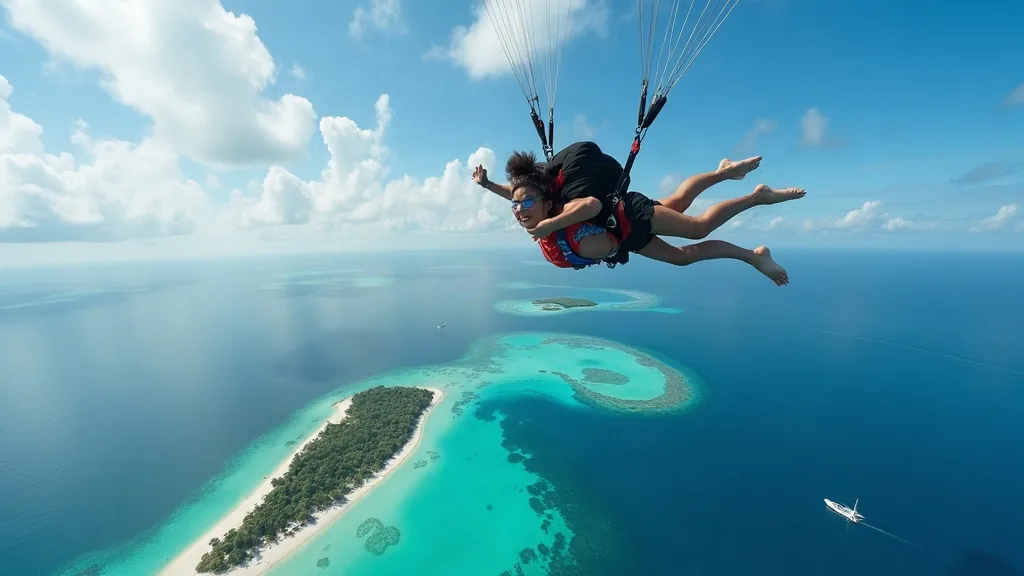
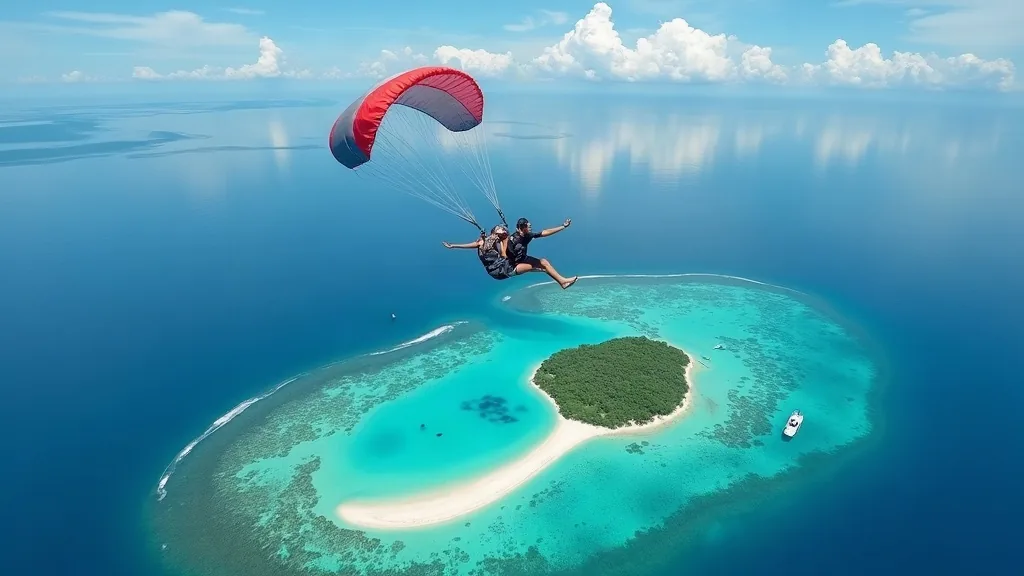
On your first tandem skydive over Karimunjawa you’ll check in, sit through a safety briefing, gear up, then climb to 10,000–12,000 ft (2025 edition) over the islands. Expect under a minute of freefall strapped to a licensed instructor, several minutes under canopy, strict safety checks, and optional HD video and photos, all completed in a few hours door-to-door; the organiser briefs exact timings on the day.
Where You’ll Be Jumping: Karimunjawa Dropzone, Islands, and Views
Karimunjawa Skydive operates a licensed temporary dropzone around Karimunjawa Airport (KWB) on Kemujan Island, Central Java, Indonesia. The aircraft typically climbs along the chain of Karimunjawa islands, giving you a clear view of:
- Main islands: Karimunjawa, Kemujan, Menjangan Besar, Menjangan Kecil
- Iconic beaches: Tanjung Gelam Beach, Batu Topeng, Ujung Gelam
- Marine park area: Coral-fringed atolls inside Karimunjawa National Park
Exit altitudes for tandem jumps usually range between 10,000 and 12,000 ft (2025 edition), depending on aircraft type, weather, and airspace clearance that day. From the 2025 exit heights you can expect under a minute of freefall; the organiser briefs exact figures on the day. The under-canopy flight lasts several more minutes, with sweeping views across the Java Sea.
If you are combining this with a wider Indonesian adventure, you can also cross-reference your logistics with related planning guides such as Komodo liveaboard packing or Makassar–Tana Beru routing.
Step-by-Step: What Actually Happens on the Day
Here is what to expect from your first tandem skydive over Karimunjawa, from arrival to landing, with realistic timings.
- Arrival & check-in
Arrive at the dropzone reception at Karimunjawa Airport or the designated check-in point in Karimunjawa town. Present your booking confirmation, ID/passport, and complete a medical and liability waiver form. Staff will check your weight and confirm you meet the age and weight restrictions. - Safety briefing & training
A licensed tandem instructor explains the jump sequence in detail:- Aircraft loading, exit position, and harness connection
- Body position in freefall (arched hips, head back, feet up)
- Canopy flight and landing posture (legs up for a slide landing)
- Communication signals during the experience
This is also where you can ask direct questions about equipment and emergency procedures; if you want deeper detail, see our safety regulation guide.
- Gear-up
You’ll be fitted with a tandem harness over your clothes, goggles, and, if needed, a windproof jumpsuit. Instructors do a double-check on leg straps, chest strap, and main lift webs. A dedicated ground crew verifies harness fit again before boarding. - Aircraft ride to altitude
Climb-out takes as long as the aircraft needs to reach the day’s exit height. The plane tracks over the island chain so you can see the reefs, sandbars, and the main village. Part-way up your instructor will clip your harness to the tandem rig with four metal attachment points and re-check handles and automatic activation device (AAD) status. - The exit and freefall
At 10,000–12,000 ft (2025 edition), the door opens. You shuffle to the edge with your instructor controlling every move. Expect:- A few seconds of strong wind and sensory overload as you leave the aircraft
- Stable freefall face-to-earth at the terminal speed typical of tandem freefall
- Noise from wind so loud that verbal communication is minimal (hand signals are used)
First-timers often report that time feels compressed; the initial shock passes in a few seconds, then you settle into a surprisingly stable, “floating” sensation. For mental preparation, many guests use our fear management guide.
- Canopy flight
At the opening height the organiser’s procedures set, your instructor deploys the parachute. The noise drops almost completely. You can talk normally and often get a chance to steer gently under supervision. You’ll see the full arc of Karimunjawa’s islands, the airport strip, and surrounding reefs. - Landing
The instructor controls the landing flare. You keep your legs up and forward for a soft slide or stand-up landing on the designated landing area near the airstrip or approved beach zone. Ground crew assist immediately after touchdown and unclip you. - Post-jump debrief & media review
If you purchased a video/photo package, you’ll review and confirm your files before they are transferred to you via download link, AirDrop, or USB (depending on package). This is also where you can re-confirm any details needed for corporate or group certificates; see group and corporate skydive packages if you are planning an event.
Expect the total time on site to run to a few hours in good weather. If there are weather or air traffic control holds, it can extend to half a day.
Safety Standards, Instructors, and First-Timer Requirements
Karimunjawa Skydive operates under Indonesian civil aviation oversight, using tandem gear and procedures aligned with global best practice standards. Tandem rigs feature:
- Two parachutes: main and reserve canopy, both inspected regularly
- Automatic Activation Device (AAD): a computer that automatically deploys the reserve if the main has not opened by a set altitude and speed
- Four-point harness attachment: two shoulders, two hips securing you to the instructor
Instructors are licensed tandem professionals whose experience and currency requirements are set by the organiser, with emergency procedure refreshers forming part of that licensing. Operational safety protocols include:
- Weather and wind limits (no jumping in thunderstorms, heavy rain, or strong upper winds beyond defined thresholds)
- Mandatory gear inspections before every flight cycle
- Briefings adapted for non-English speakers where possible
Standard first-timer eligibility rules at Karimunjawa generally include:
- Age: adults; the organiser publishes the exact age rule and any consent conditions for each edition
- Weight: the 2025 sheet listed a 45–95 kg guest range; the organiser confirms the final limit and any harness-fit conditions at launch
- Health: no recent surgery, uncontrolled heart conditions, or serious back/neck injuries. Asthma, epilepsy, and pregnancy are usually disqualifying unless cleared specifically in writing by a doctor and the operator
For a deeper overview of regulations, medical notes, and how refunds work if you are weathered out, refer to Karimunjawa Skydive Safety Regulations and Refund Policy & Booking Conditions.
Packages, Pricing, and How to Book Your First Tandem
Actual prices can shift with aircraft costs, fuel, and season, but these ranges will help you plan. All amounts below are per person and quoted in Indonesian Rupiah (IDR) for guidance:
- Standard Tandem Skydive: quoted on request
Includes briefing, gear, 10,000–12,000 ft jump, instructor, and basic insurance cover. - Premium Altitude Tandem (up to ~12,000 ft (2025 edition)): quoted on request
Longer freefall, priority manifesting where possible, and sometimes bundled with a basic media package. - Group / Corporate Tandem Packages: start around quoted on request per person for larger groups, subject to aircraft charter and the organiser’s minimum numbers.
Packages are sometimes combined with island accommodation or yacht experiences; if you are planning a wider Indonesian route including Komodo or Raja Ampat, cross-check with our Raja Ampat planning checklist and liveaboard expertise guide.
For Karimunjawa specifically, you can review current options in:
How booking typically works:
- Pay whatever deposit the organiser sets for the edition to secure your slot and aircraft allocation
- Confirm your target date and backup date in case of weather holds
- Receive a detailed confirmation with reporting time, location pin, and clothing guidance
If you are traveling at peak periods (Idul Fitri, Christmas–New Year, and June–August), slots can fill weeks out. Use our last-minute booking tips if your dates are fixed or tight.
Best Season, Weather Risks, and What to Wear
Karimunjawa has a tropical monsoon climate. Conditions for skydiving are heavily weather-dependent:
- Best months for consistent operations: May to October
Dry season with more stable winds, clearer visibility, and less convective storm build-up. - Shoulder months: April, November
Operational, but there can be more cloud layers and occasional showers. - Rainy season: December to March
Higher cancellation risk due to showers, low clouds, and sea conditions affecting ferries to Karimunjawa.
Typical takeoff temperatures at ground level range from 27–32°C, but at 10,000–12,000 ft (2025 edition) it can feel 5–10°C cooler with strong wind. Recommended clothing (summarized from our Karimunjawa skydive attire guide):
- Close-fitting T-shirt or base layer (no low-cut tops)
- Knee-length shorts, leggings, or lightweight pants
- Closed shoes with laces: trainers or light sneakers (no sandals, flip-flops, or heels)
- Hair tied back securely; remove jewelry, watches, and loose items
On cooler or windier days, the operator will usually offer a jumpsuit or windbreaker. Sunglasses are removed before boarding; you get goggles that fit over most prescription lenses.
For seasonal specifics, including national holiday surcharges and ferry-linked timing issues, consult Best Time to Skydive in Karimunjawa.
Video, Photo Options and Making the Most of Your First Jump
Most first-timers want a full record of their jump, from gearing up to landing. Standard media options usually include:
- Handcam video (most common): quoted on request
Instructor wears a camera on the wrist. You get close-up footage of your face, exit, freefall, canopy, and landing, plus a set of still frames extracted from the video. - Outside camera flyer: quoted on request
An additional skydiver with a helmet-mounted camera leaves the aircraft with you and films from a distance, giving dramatic island-wide shots and full-body perspective in freefall. Usually combined with handcam in a premium bundle. - Edited short film for social media: usually a short vertical and horizontal cut delivered via link, with clip length and delivery time confirmed by the organiser’s media team.
For details, delivery times, and sample formats, see Video & Photography Packages. If you need content tailored for a brand or campaign, mention this during booking so the camera flyer can frame shots accordingly.
To get the most from your first jump:
- Tell your instructor your priorities: calm experience vs. more spins and turns under canopy.
- Practice the freefall arch and landing position on the ground until you can do it without thinking.
- Avoid heavy meals and alcohol before your slot; eat light, stay hydrated, and skip hangovers.
- Plan buffer time after your skydive so weather delays don’t disrupt ferry or flight connections.
If you want tailored advice on dates, prices, or pairing your jump with yachts, dive trips, or overland routes, share your rough dates and group size via the reservation form chat or email bd@juaraholding.com and the Karimunjawa Skydive team will respond with precise options.

 Editorial desk Karimunjawa Skydive